
Servo Heavy-Duty Laser Edge Bander
Laser bonding with no glue line — including the panels other machines turn away: 8 mm skins, 40 mm strips, cut-outs and hinge holes.
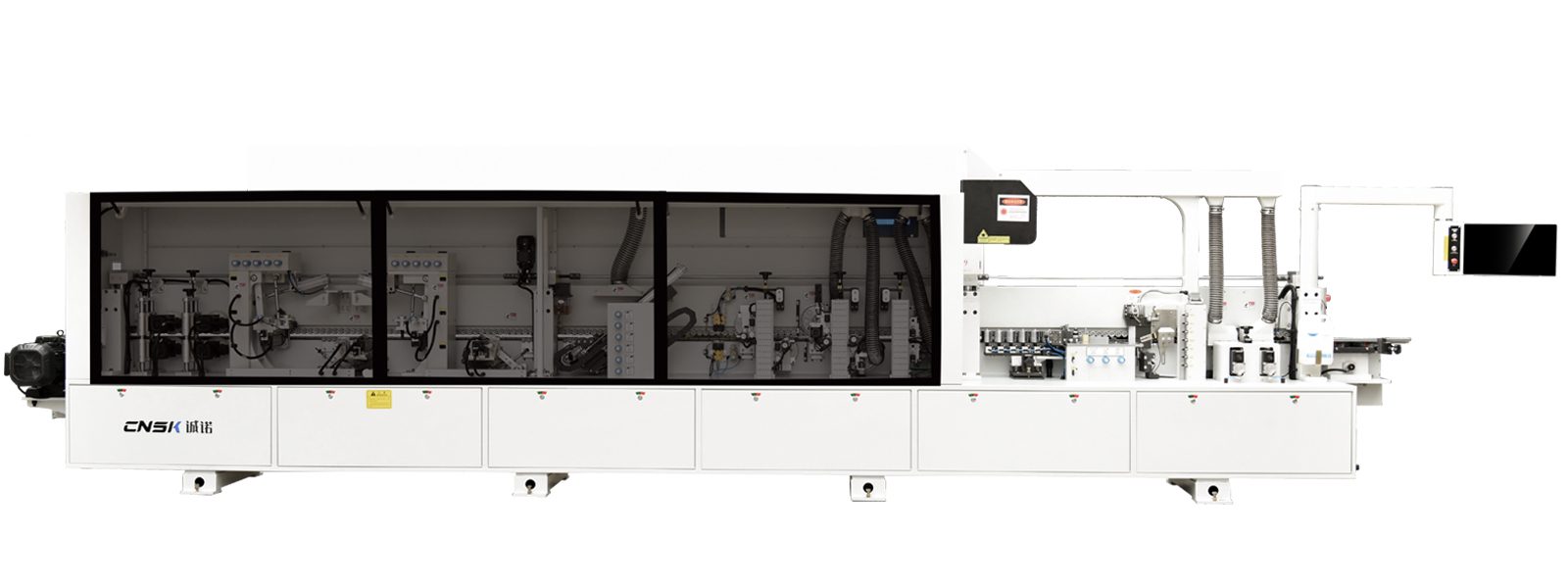
Overview
A laser edge bander removes the glue from the joint. The band is fused to the panel surface, so there is no EVA or PUR line to go dark, chalk or fail along a high-gloss finish. For a factory selling lacquered and matte panels side by side, that is the difference between a sample that survives a year of use and one that does not.
The heavy-duty frame is what lets the machine keep that finish on work that is normally hand-fed or rejected: thin skins at 8 mm, strips as narrow as 40 mm, and panels with cut-outs and hinge holes already drilled. Those are the parts that decide a factory's real yield, not the 18 mm door panel.
Station sequence
Fifteen positions from the screen to the outfeed: the 21.5-inch screen first, then separating agent, pre-milling, PUR gluing and laser bonding, six-wheel pressing, the trimming and scraping cells, and polishing before the flow strip.
Technical data
Full technical data sheet, tooling list and power requirements are supplied with the offer for your panel range.
What the machine is built to do
- No glue lineThe band is bonded by laser rather than hot-melt adhesive, so the joint stays the colour of the band itself. Nothing to clean off the panel face, nothing that ages differently from the board.
- Thin panels from 8 mmSkins and thin door faces that would deform under a pressure roller keep their shape through the line.
- Straight panels 8–45 mmOne setting covers the range from thin skins to 45 mm worktops, so a mixed order does not need a second machine.
- Narrow strips to 40 mmStrips and edge build-ups down to 40 mm width feed and track without the fence pushing them off line.
- Cut-outs and hinge holesPanels that arrive already drilled are banded over the openings instead of being pulled out of the batch and finished by hand.
Other formats
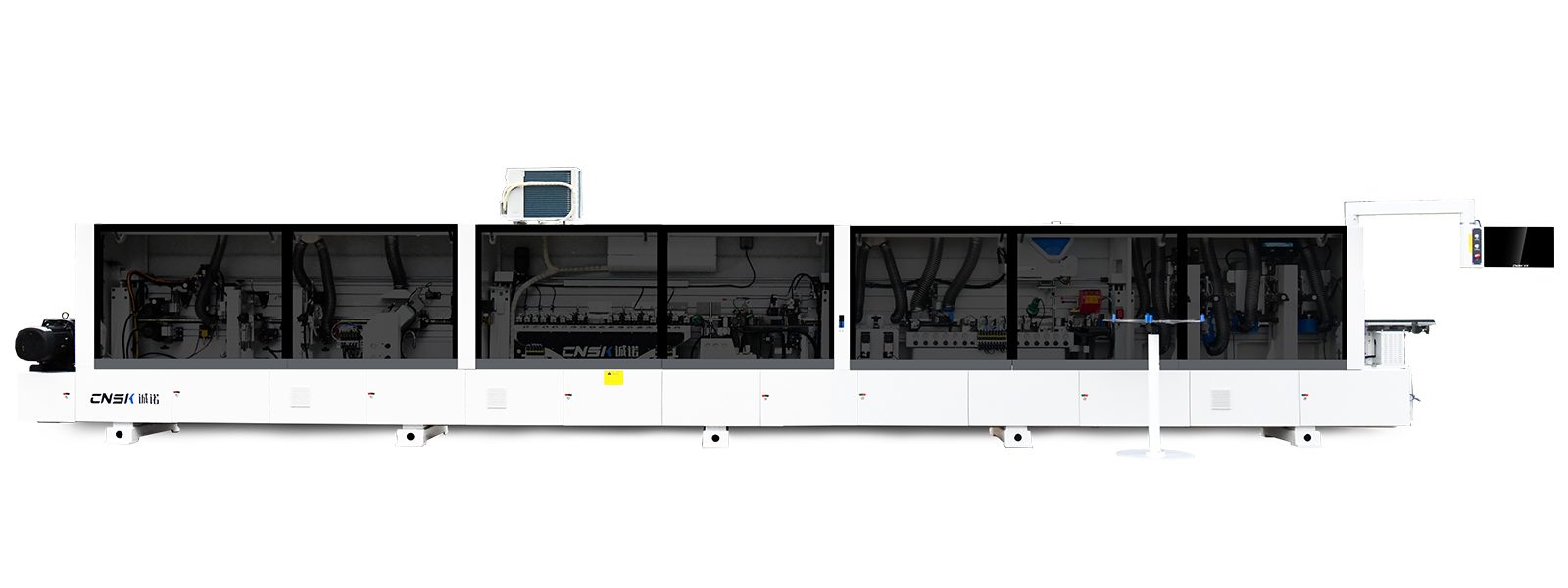
Double-Layer Handle-Free Edge Bander
Thirty handle-free profiles on one machine, switched from the screen with no waiting between shapes.
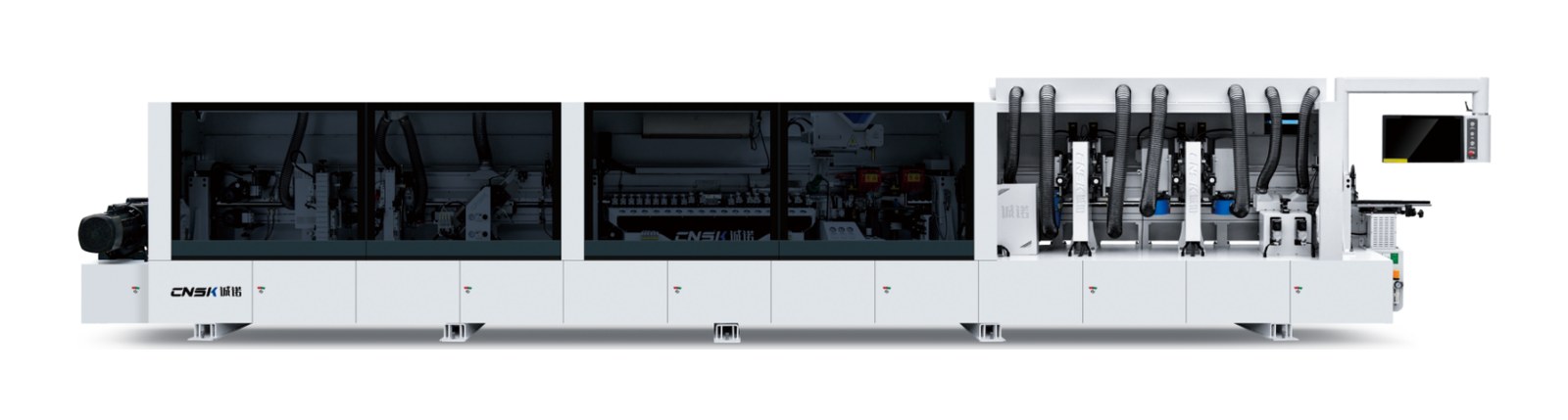
45° Bevel and Straight Edge Bander
The 45° bevel and the straight edge finished on the same line, plus soft-forming for wrapped profiles.
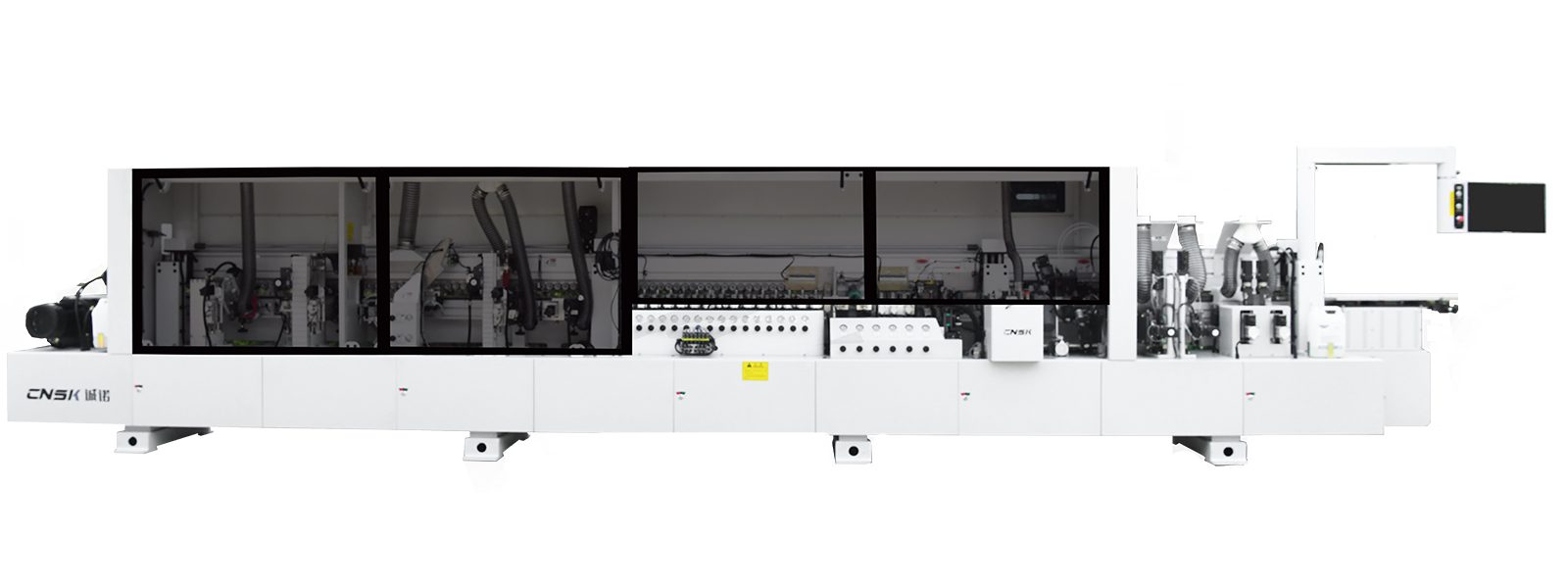
Five-Profile Arc and Bevel Edge Bander
Half-round, quarter-round, 45° bevel-straight, full bevel and duck-bill — five profiles on one bed.
Put CN500 against your panel.
Send the thickness, width and band you run. You get a station list, the tooling and a price against your name.