Edge banding machinery · Dongguan Request a configuration
Home/Machines/FM758JCS Ultra
FM758JCS Ultra

Double-Layer Handle-Free Edge Bander

Thirty handle-free profiles on one bed. Change shape from the screen, keep the line running, and hold the profile without a second pass.
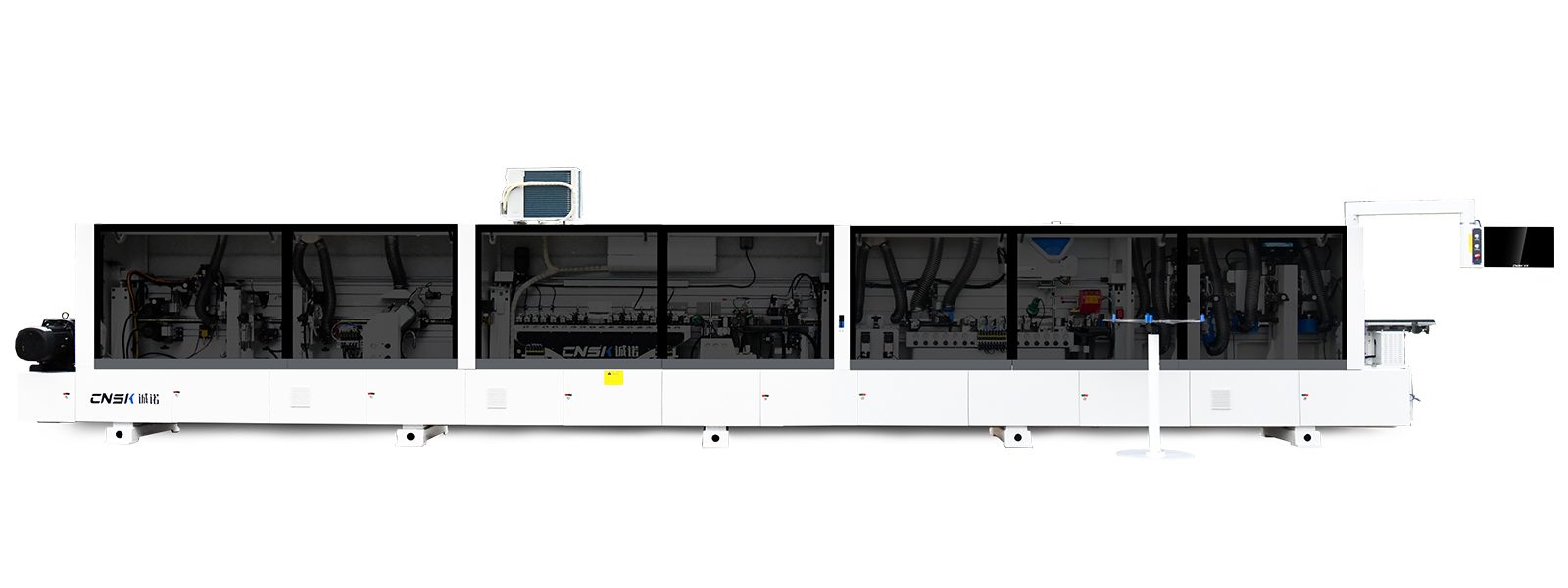
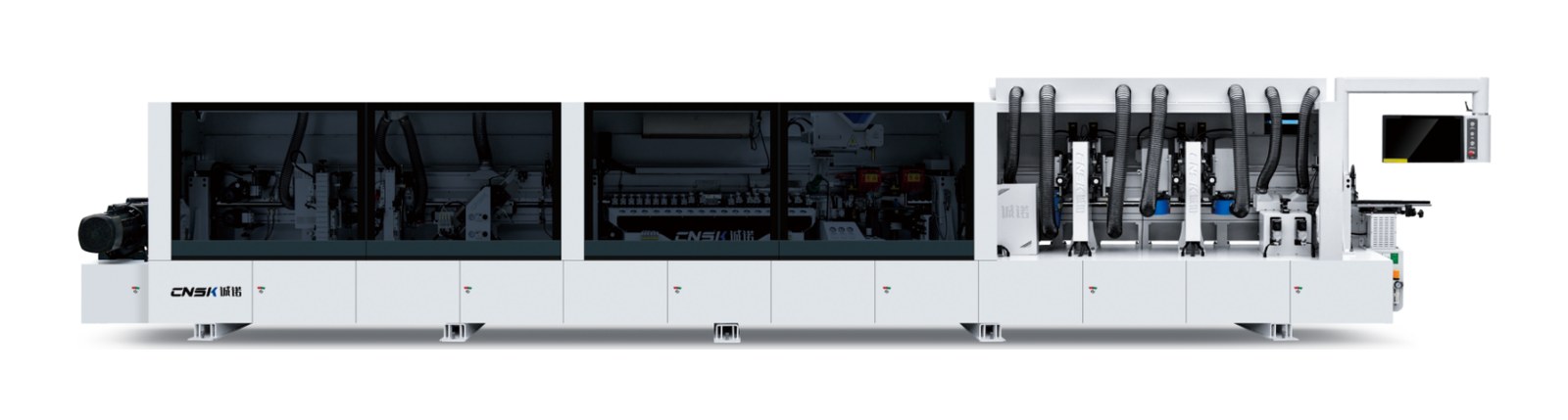
FM758JCS Ultra — Double-Layer Handle-Free Edge Bander

Overview

Handle-free doors are where a kitchen's price is decided, and where most factories lose time: every new J-profile or C-profile used to mean a tooling change, a test panel and a stopped line. This machine carries the profile library in the controller instead.

Two layers of banding let the same station close a C-type or a J-type wrap in one pass, and PUR gluing is available for the wet areas and the high-humidity markets where EVA does not hold. Panels can also be released by scanning the QR code on the work order, so the recipe follows the batch rather than the operator's memory.

FM758JCS Ultra CNSK · Dongguan
Handle-free profiles30
BandingDouble layer
GluingEVA / PUR
ChangeoverOne click

Station sequence

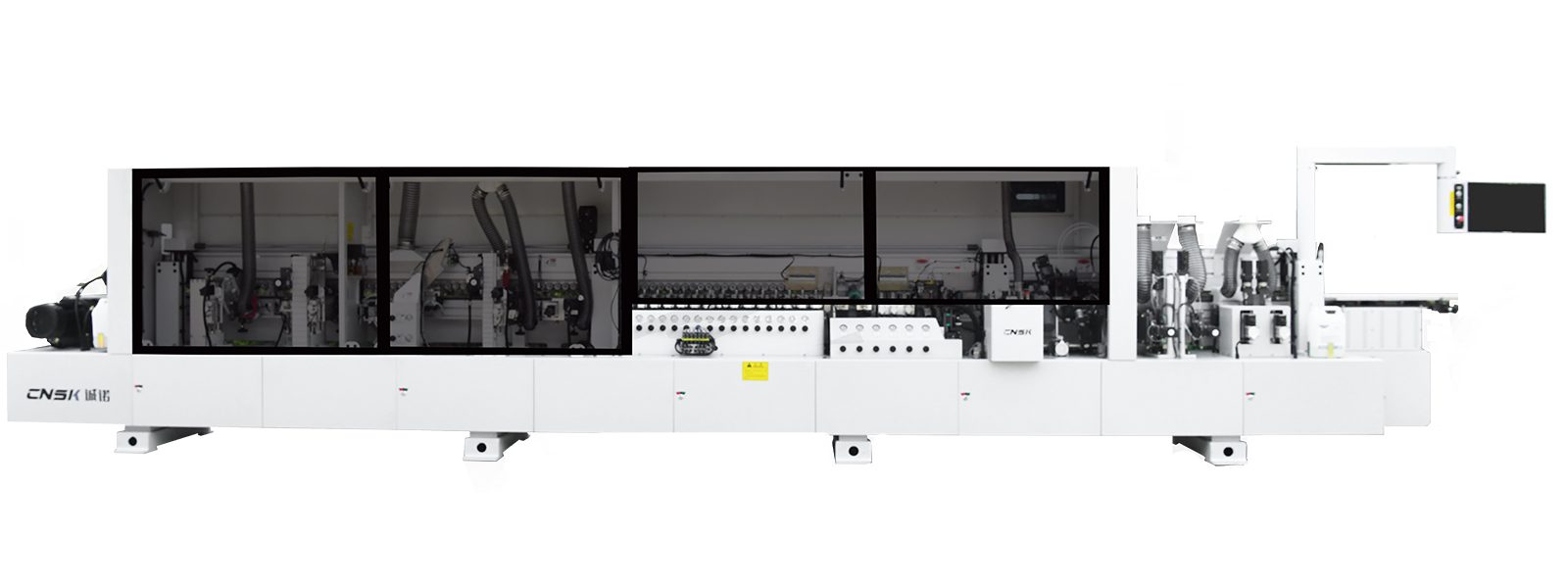
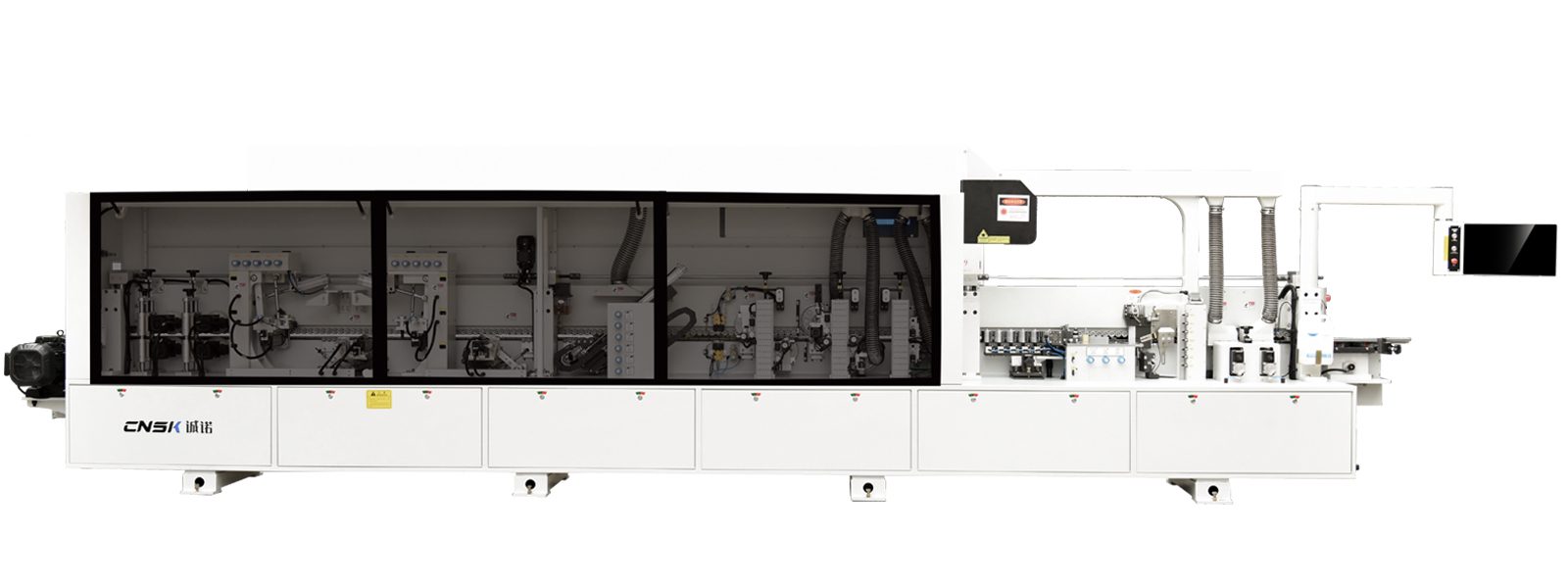
Twenty-five positions, screen first: forming cutters and the gluing section, the forming press, then rough and fine trimming, scraping, cleaning and servo polishing.

01
21.5-inch control screen
Industrial-grade 21.5-inch screen with a large graphical interface; parameters set by touch or input box, changes shown live.
02
Separating agent
A fine spray separates surplus glue from the panel face, so hot-melt does not mark the board after pressing.
03
Servo forming cutter 1/2
Two 7 kW spindles mill the profile grooves — J, C, W, arc, half-pass, ox-horn and drop shapes among more than twenty-five — with the shape called from the screen.
04
Servo forming cutter 3/4
A second pair of servo spindles mills the opposite face of the profile, so a wrap is cut on both sides of the band in one pass.
05
Bottom chamfer
The lower edge is chamfered to the notch contour, so the band folds under the panel instead of lifting at the corner.
06
Gluing furnace
EVA glue pot; the melt is held at working temperature through the shift.
07
Fast-melt glue
The fast-melt unit brings the adhesive to working temperature in less time, so a cold start does not hold up the line.
08
Forming and pressing 1
The first laminating group follows the contour of the profiled panel and seats the first band layer along the groove.
09
Notch trimming
The notch edges are fine-trimmed after pressing, so the profile reads clean and the panel face stays flat.
10
Rough trimming
The first trim brings the band's upper and lower edges down to the panel faces and leaves the allowance for the finishing head.
11
Pre-milling
Two milling cutters re-finish the saw marks, burrs and out-of-square edges left by the panel saw, so the band seats on a clean face.
12
Heat lamp
The board and the glue are pre-heated before pressing, which keeps the bond even in cold weather.
13
PUR gluing
A no-cleaning PUR pot switches between two adhesive colours and dispenses evenly, for joints that have to hold and stay invisible.
14
Heat gun
Hot air softens the band before it enters the forming press, so a tight radius folds without a white stress line.
15
Servo tape feed and notch gluing
Tape feed is servo-matched to the panel speed; glue is applied in the notch and on the band at separate points.
16
Pressing
High-precision pressure wheels load the band evenly as it meets the panel, so the joint sits flat and holds.
17
Baking lamps 1–4
Four lamps heat the band along the forming section, so it stays soft across a long profile and a cold shop floor.
18
Seventeen-group forming press
Seventeen pressure components load the band along every curve and corner of the profile, so the wrap closes without a second pass.
19
Rough trimming 2
A second rough-trim pair takes the band down to the panel faces after the forming section, with four depth settings.
20
Head-and-tail trimming, double track
Two tracks run the ends, so a pair of panels is trimmed without dropping the feed speed.
21
Fine trimming
The finishing cut takes the overhang back to the panel face; this is the pass that decides how clean the joint reads.
22
Scraping and groove trimming
Trim marks and surplus glue are scraped off, and the groove edge is trimmed at the same station.
23
Precise flat scraping
A flexible scraper takes surplus hot-melt off the panel face and the band, leaving the edge flat before polishing.
24
Cleaning
Residual hot-melt is diluted and isolated before polishing, so it lifts off instead of being smeared along the edge.
25
Servo polishing
The polishing head is servo-driven and follows the profiled contour, so the cotton wheel stays on the band instead of the panel face.

Technical data

ModelFM758JCS Ultra
Panel width≥ 120 mm
Panel thickness18 – 22 mm
Edge band thickness0.55 / 0.6 mm
Edge band width55 – 60 mm
Feed speed6 m/min
Total power60 kW
Machine size (L × W × H)11380 × 1200 × 2260 mm

Values from the FM758JCS Ultra technical data sheet in the 2026 configuration list.

What the machine is built to do

  • 30 handle-free profilesThe shapes that used to need a dedicated machine or a hand station are all in the recipe library — J-type, C-type and the narrower furniture profiles.
  • One-click profile switchingChange shape from the control screen and run the next panel. No tooling swap, no waiting for a test piece to be signed off.
  • Double-layer bandingTwo banding layers in one pass close the wrap that single-layer machines leave open at the profile edge.
  • PUR gluing availableFor wet areas, bathrooms and export markets where the joint has to survive humidity, the machine can be specified with PUR rather than EVA.
  • QR-code feedingScan the work order at the infeed and the machine loads the matching profile recipe, which keeps a mixed batch in sequence.

Put FM758JCS Ultra against your panel.

Send the thickness, width and band you run. You get a station list, the tooling and a price against your name.