
Skeleton-Line Grille Edge Bander
Built for skeleton-line doors: notch-line pre-milling, a 35° bevel saw, nail-rake grooving and strip slitting, on a track-fed 13,020 mm bed.

Overview
- Eighteen processing cells after the screen and the conveyor: pre-milling, bevel sawing, PUR bevel gluing, grooving, synchronous pressing, trimming, four-head tracking, scraping, nail-rake grooving, cleaning, polishing, bevel-and-straight grooving, grille grooving and slitting.
- The high-pressure beam runs on a track and holds the recessed face of a skeleton-line door flat, so the panel goes on without a pad or a levelling block.
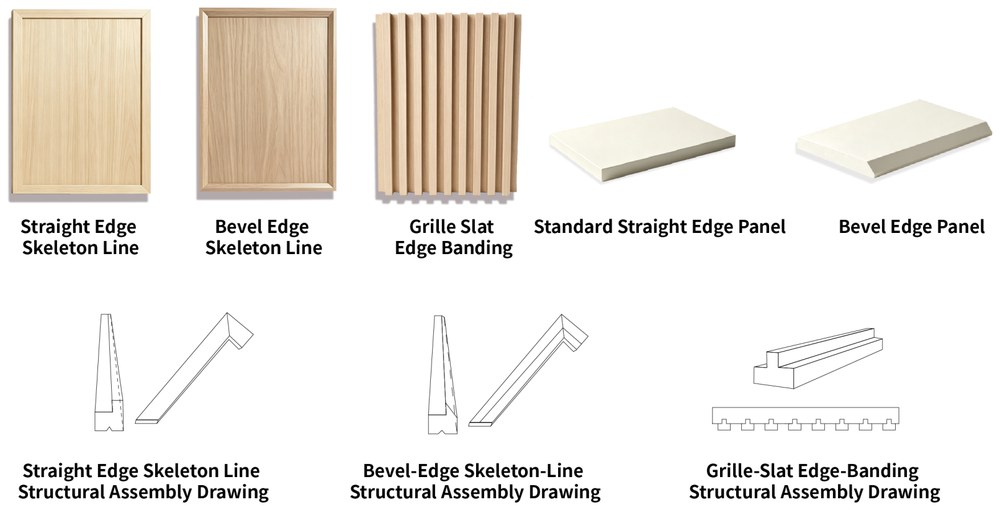
- Three skeleton forms come off the same line — straight skeleton line, 35° bevel skeleton line and grille slat strips, sized to your profile.
- Nail-rake grooves and strip slitting are cut to 0.1 mm, so skeleton lines are fixed with a pneumatic nail gun instead of glue and a cold press.
- Straight panels 9–60 mm, bevel panels 15–40 mm; width ≥ 60 mm straight, ≥ 80 mm bevel; 60 kW, 380 V, 0.7 MPa; frame 13,020 × 900 × 1,690 mm.
Station sequence
Twenty positions on the bed: the screen and the conveyor first, then the eighteen processing cells, from notch-line pre-milling to strip slitting.
Technical data
| Model | FM820JCDH |
| Feed rate | 16 – 23 m/min |
| Panel width | ≥ 60 mm straight / ≥ 80 mm bevel |
| Panel thickness | 9 – 60 mm straight / 15 – 40 mm bevel |
| Edge band thickness | 0.4 – 3 mm |
| Edge band width | 12 – 65 mm |
| Pressure beam | Electric lift |
| Processing stations | 18 (20 positions including track conveyor and screen) |
| Control screen | High-definition wide touch screen, mouse and keyboard optional |
| Input voltage | 380 V |
| Air pressure | 0.7 MPa |
| Total power | 60 kW |
| Machine size (L × W × H) | 13020 × 900 × 1690 mm |
Values from the FM820JCDH technical data sheet and the 2026 configuration list. The sheet also quotes 9–45 mm for standard straight banding on skeleton-line panels; the range is confirmed on the data sheet issued with the offer.
What the machine is built to do
- Track-fed high-pressure beamThe beam runs on a track and holds the recessed face of a skeleton-line door flat, so the panel needs no pad or levelling before banding.
- Skeleton lines, three formsStraight skeleton lines, 35° bevel skeleton lines and grille slat strips come off the same line, sized to your profile.
- Nail-gun assemblyRake grooves cut to 0.1 mm let skeleton lines be fixed with a pneumatic nail gun instead of glue and a cold press, which takes the cure time out of the schedule.
- Offcuts turned into stripsThe slitting assembly turns offcuts and damaged panels into skeleton-line strips instead of waste.
- 35° bevel and straight on one bedA profiling saw sets the skeleton-line bevel angle, and the straight edge runs on the same bed; the format is chosen from the screen.
Edge samples
Other formats
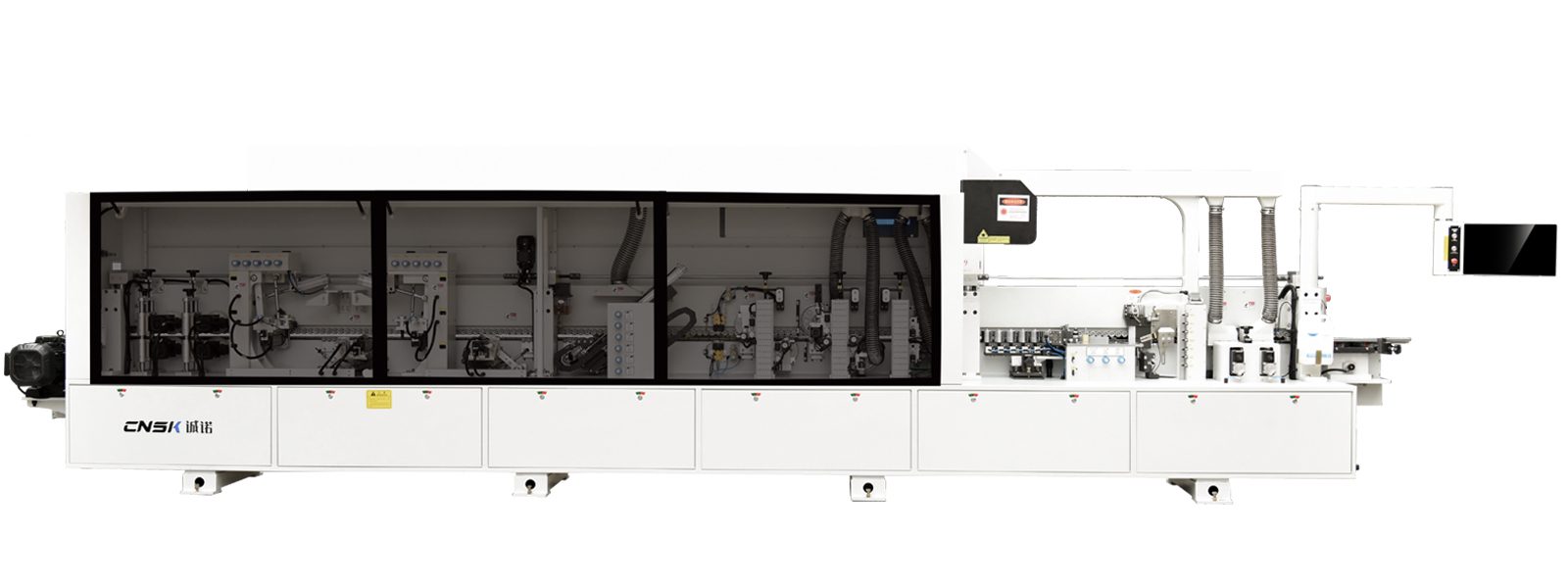
Servo Heavy-Duty Laser Edge Bander
Laser bonding with no glue line, on panels from 8 mm and strips down to 40 mm.
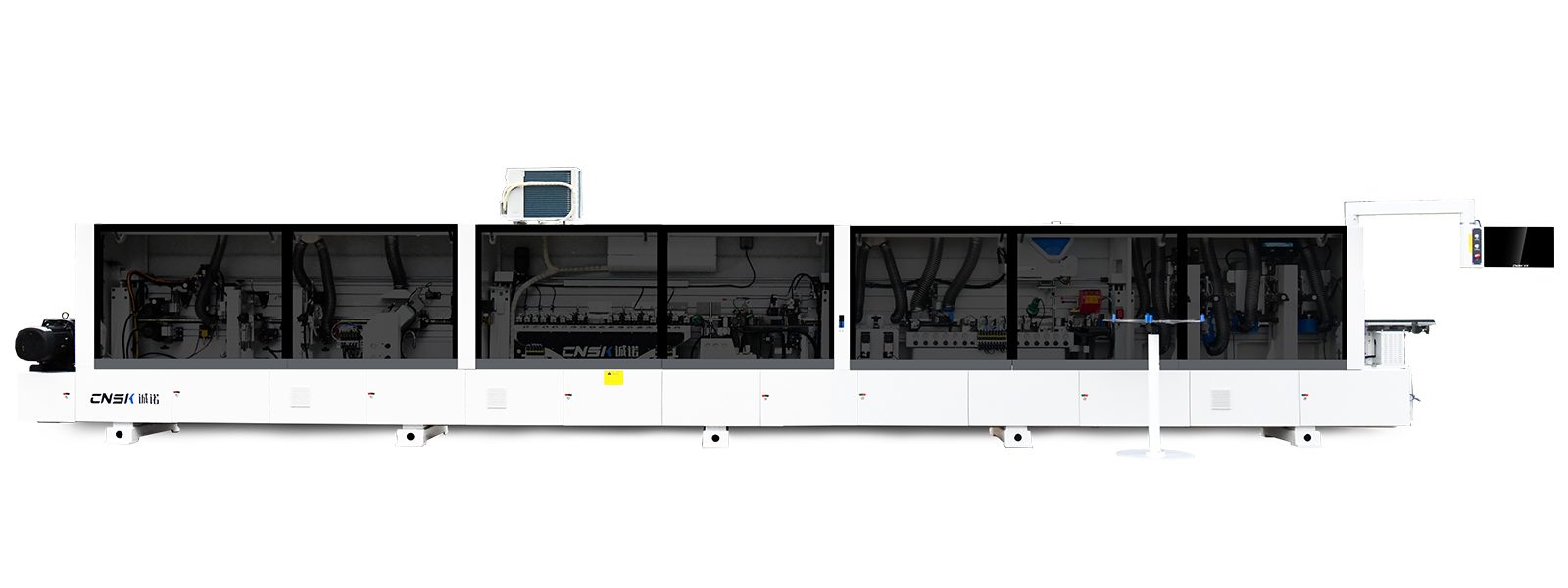
Double-Layer Handle-Free Edge Bander
Thirty handle-free profiles on one machine, switched from the screen with no waiting between shapes.
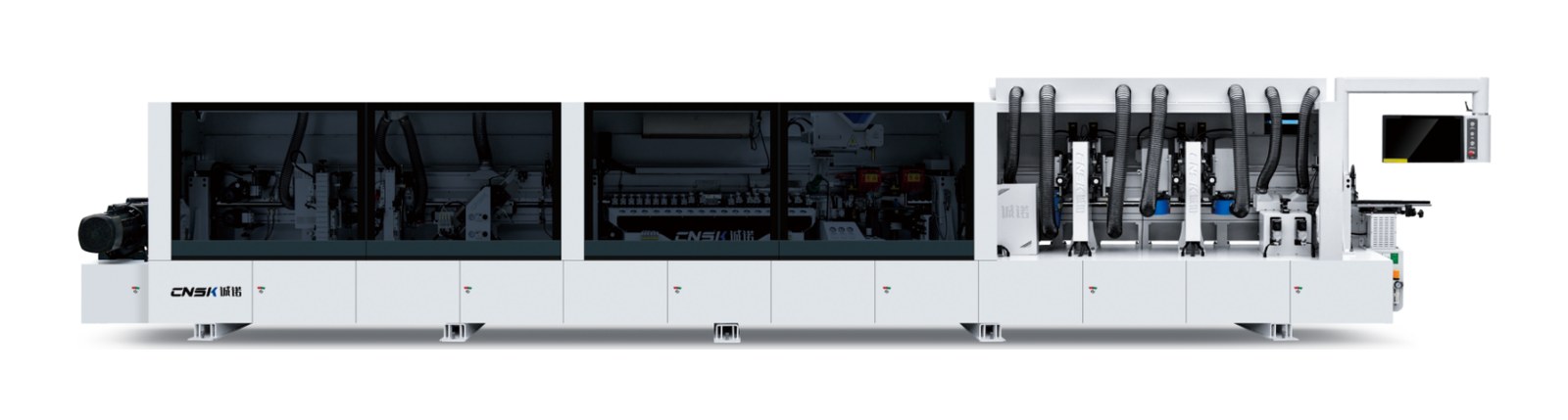
45° Bevel and Straight Edge Bander
The 45° bevel and the straight edge finished on the same line, plus soft-forming for wrapped profiles.
Put FM820JCDH against your panel.
Send the thickness, width and band you run. You get a station list, the tooling and a price against your name.